

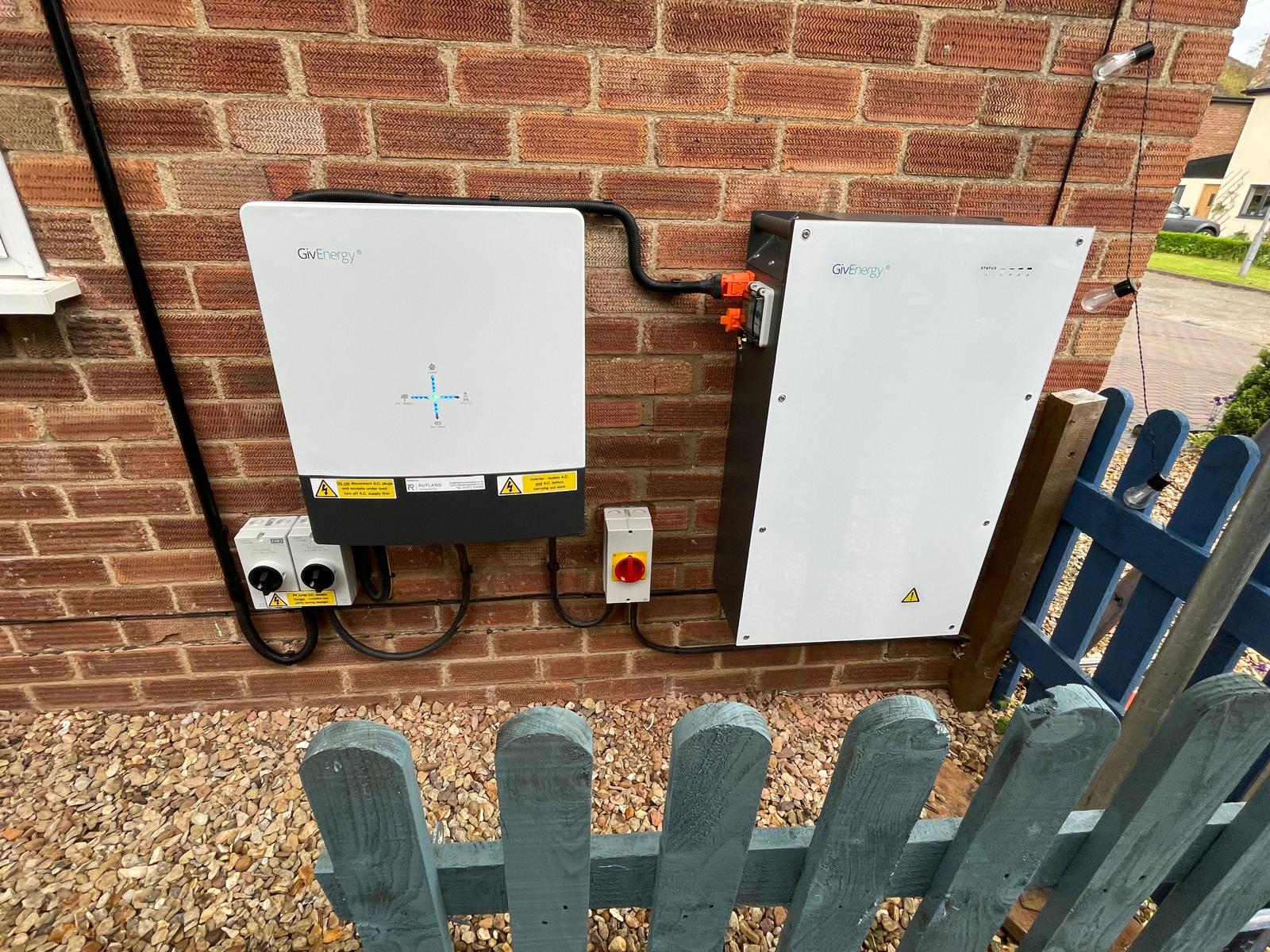
If you’ve been researching solar in the UK, you’ll have noticed how often battery storage now features in the conversation. A few years ago, most homes installed panels without even considering a battery. Today, more than half of homeowners choosing domestic solar also add storage — and it’s easy to see why.
A well-matched battery lets you keep much more of the energy your panels produce, rather than pushing it back to the grid at times you don’t need it. That means greater savings, better protection against rising energy prices, and a system that genuinely works harder for your home.
Still, that doesn’t mean a battery is worth it for every property. In this guide, we break down the real solar battery cost in the UK, how storage interacts with SEG payments, and the situations where adding a battery genuinely delivers a strong financial return.
What Is Solar Battery Storage?
Solar battery storage allows your home to store excess energy generated throughout the day. Rather than sending unused power back to the grid, the battery keeps it for later — usually the evenings, when most households use the most electricity.
Without a battery, even a very efficient domestic solar system will need to pull energy from the grid when the sun goes down. With a battery, you rely far less on your supplier and use far more of your own clean energy.
If you want to explore battery options in detail, Rutland Renewables has a dedicated page on domestic battery storage with system types, costs and benefits.
How Much Does Solar Battery Storage Cost in the UK?
The cost of a solar battery depends on size, brand and installation requirements. As a guide:
Average UK Solar Battery Prices (2025):
- 5–7kWh: £3,500–£5,500
- 8–10kWh: £5,500–£8,000
- 12–15kWh: £8,000–£11,000
- Whole-home systems (15kWh+): £11,000–£15,000+
These prices include installation and a compatible inverter. Higher-end batteries, especially those with backup capability, typically cost more but offer better performance over time.
What Affects the Cost?
- Battery capacity (kWh)
- Manufacturer (Tesla, GivEnergy, SolarEdge, Huawei, Fox ESS etc.)
- Whether your existing system needs upgrades
- Backup requirements
- Whether the battery is AC-coupled or part of a new domestic solar installation
If you’re exploring both panels and storage together, our domestic solar page explains how they can be paired for the best long-term value.
How Solar Panels with Battery Storage Save You Money
Batteries increase your savings in three main ways:
1. Higher Self-Consumption
Typical solar-only systems use around 30–45% of what they generate.
Add a battery and you usually increase this to 65–85%, depending on your usage pattern.
2. Lower Grid Imports
You use your stored energy during the evenings, reducing the amount you buy at peak prices.
3. SEG Export Payments
Most suppliers now offer export rates between 10–20p per kWh. With the right setup, you can store what you need and export surplus energy at favourable rates.
How Long Does a Solar Battery Last?
Most modern batteries last 10–15 years, or around 6,000–10,000 cycles.
You’ll see warranties guaranteeing around 70–80% capacity after 10 years.
LiFePO4 batteries are now standard in the UK due to their:
- Longer lifespan
- Safety
- High usable capacity
- Excellent reliability
When Solar Batteries Are Actually Worth It
Batteries are most cost-effective for homes that:
✓ Use most energy in the evenings
Your stored energy does the heavy lifting when the panels stop producing.
✓ Have predictable usage patterns
If you work from home or have regular routines, you benefit more.
✓ Face high electricity rates
At 25–30p+ per kWh, every unit you avoid buying is a meaningful saving.
✓ Want protection during power cuts
Many households in rural areas like Rutland value this feature.
✓ Own or plan to buy an EV
Pairing storage with EV charging gives you even more control over running costs.
✓ Want to future-proof their home
Energy prices and standing charges continue to rise — batteries soften the impact.
When a Battery Might Not Be Necessary
There are scenarios where a battery delivers weaker financial returns:
- Very low evening usage
- Small solar arrays (<2.5kW)
- Homes already achieving high solar utilisation
- Tight budgets
In these cases, a strong domestic solar system still offers excellent savings without storage. A quick usage analysis will show whether a battery is genuinely worthwhile.
Do Solar Panels with Battery Storage Pay for Themselves?
Most systems do, though the payback period varies.
A typical UK home sees a 7–11 year payback, influenced by:
- Size of solar array
- Battery capacity
- Export rate
- Usage habits
- Roof orientation
- Energy tariffs
Homes with high evening usage often see the quickest return.
Can You Add a Battery to an Existing Solar System?
Yes — almost all homes can upgrade. You can add:
- A hybrid inverter (replacing your old one), or
- An AC-coupled battery, which works alongside your current system
Both options deliver strong savings and flexibility. Our domestic battery storage guide covers upgrade options in more depth.
How to Choose the Right Battery Size
A simple guide:
- 3–4 bedroom home: 7–10kWh
- Larger homes: 10–15kWh
- EV owners: 10–20kWh
- Smaller homes: 5–6kWh
Your battery should match your evening and night-time usage — not just the size of your solar array.
Are Solar Batteries Worth It in Winter?
Yes. Even though generation dips, your battery still helps you avoid expensive imports. Many households also use time-of-use tariffs, charging the battery cheaply overnight and using the stored energy during the day.
Frequently Asked Questions
Do I need a battery to get SEG?
No — you can still earn SEG export payments without storage.
Do all batteries offer backup?
Not all systems do. If backup power matters to you, choose a unit designed for it.
Can I expand my system later?
Most batteries are modular, allowing extra capacity when needed.
Do batteries require maintenance?
No — they’re sealed units with minimal upkeep.
Will it still work on cloudy days?
Yes. Solar panels generate in all daylight conditions and the battery stores what’s available.
Conclusion: Is Solar Battery Storage Worth It?
For most UK households, the answer is yes. When paired with a well-sized set of domestic solar panels, a battery helps you use more of your own clean energy, cut reliance on the grid, and protect yourself from rising energy costs.
But the biggest gains come from systems designed around your home and lifestyle. That’s why a tailored assessment always gives the clearest picture of savings and payback.
Ready to See Whether Solar with Battery Storage Is Right for Your Home?
Rutland Renewables offers honest advice, high-quality installations and clear pricing across Rutland, Leicestershire and the surrounding areas.
Start with a free, no-obligation assessment today at rutlandrenewables.co.uk — or explore our services via
Domestic Solar and
